

Showing posts with label internet. Show all posts
Showing posts with label internet. Show all posts
Thursday, January 31, 2019
Wednesday, November 14, 2018
Thursday, June 1, 2017
From The Economist review of Everybody Lies: Big Data, New Data, and What the Internet Can Tell Us About Who We Really Are by Seth Stephens-Davidowitz ::
Modern microeconomics, sociology, political science and quantitative psychology all depend to a large extent on surveys of at most a few thousand respondents. In contrast, he says, there are “four unique powers of Big Data”: it provides new sources of information, such as pornographic searches; it captures what people actually do or think, rather than what they choose to tell pollsters; it enables researchers to home in on and compare demographic or geographic subsets; and it allows for speedy randomised controlled trials that demonstrate not just correlation but causality. As a result, he predicts, “the days of academics devoting months to recruiting a small number of undergraduates to perform a single test will come to an end.” In their place, “the social and behavioural sciences are most definitely going to scale,” and the conclusions researchers will be able to reach are “the stuff of science, not pseudoscience”.
Friday, May 26, 2017

Friday, April 21, 2017

Monday, March 13, 2017

Wednesday, February 22, 2017
Title: Effectiveness of Paid Search Advertising: Experimental Evidence
Authors : Daisy Dai, Michael Luca
Abstract: Paid search has become an increasingly common form of advertising, comprising about half of all online advertising expenditures. To shed light on the effectiveness of paid search, we design and analyze a large-scale field experiment on the review platform Yelp.com. The experiment consists of roughly 18,000 restaurants and 24 million advertising exposures – randomly assigning paid search advertising packages to more than 7,000 restaurants for a three-month period, with randomization done at the restaurant level to assess the overall impact of advertisements. We find that advertising increases a restaurant’s Yelp page views by 25% on average. Advertising also increases the number of purchase intentions – including getting directions, browsing the restaurant’s website, and calling the restaurant – by 18%, 9%, and 13% respectively, and raises the number of reviews by 5%, suggesting that advertising also affects the number of restaurant-goers. All advertising effects drop to zero immediately after the advertising period. A back of the envelope calculation suggests that advertising would produce a positive return on average for restaurants in our sample.
Download the paper | View all papers
Authors : Daisy Dai, Michael Luca
Abstract: Paid search has become an increasingly common form of advertising, comprising about half of all online advertising expenditures. To shed light on the effectiveness of paid search, we design and analyze a large-scale field experiment on the review platform Yelp.com. The experiment consists of roughly 18,000 restaurants and 24 million advertising exposures – randomly assigning paid search advertising packages to more than 7,000 restaurants for a three-month period, with randomization done at the restaurant level to assess the overall impact of advertisements. We find that advertising increases a restaurant’s Yelp page views by 25% on average. Advertising also increases the number of purchase intentions – including getting directions, browsing the restaurant’s website, and calling the restaurant – by 18%, 9%, and 13% respectively, and raises the number of reviews by 5%, suggesting that advertising also affects the number of restaurant-goers. All advertising effects drop to zero immediately after the advertising period. A back of the envelope calculation suggests that advertising would produce a positive return on average for restaurants in our sample.
Download the paper | View all papers
Tuesday, February 14, 2017
Friday, January 13, 2017

Thursday, December 1, 2016

Monday, August 1, 2016

Thursday, January 28, 2016

Wednesday, November 25, 2015
Tuesday, August 4, 2015
Thursday, February 26, 2015

Wednesday, February 18, 2015
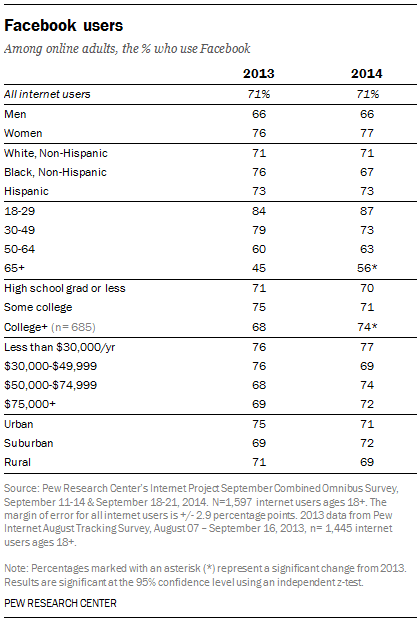


Monday, February 2, 2015
Wednesday, January 14, 2015
Monday, January 12, 2015

Wednesday, December 17, 2014
